Premium Link-Building Services
Explore premium link-building options to boost your online visibility.
Explore premium link-building options to boost your online visibility.
In the face of the global biodiversity crisis, conservationists are fighting a war on two fronts. The first is the tangible loss of habitat and species. The second, often less discussed, is the Data Deficit. We cannot protect what we do not count. For vast swathes of the planet—from the remote wetlands of the Danube Delta to the dense forests of Eastern Europe—ornithological data is historically fragmented, outdated, or locked behind language barriers.
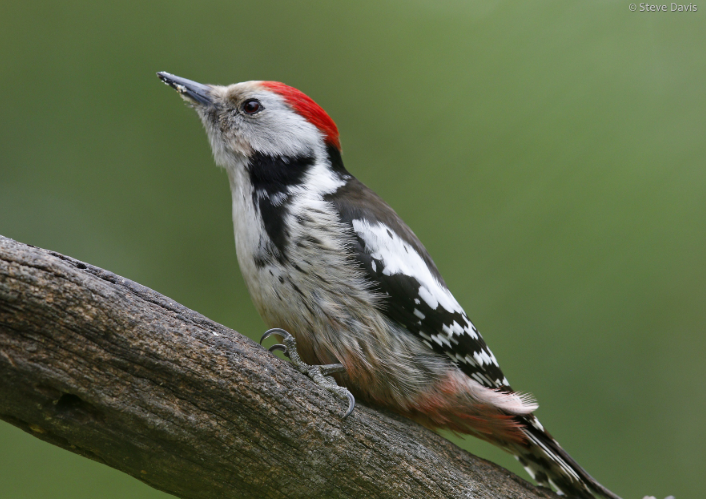
Traditionally, filling these gaps was the purview of university expeditions and government surveys—endeavors limited by budget and manpower. But in the last decade, a new, massive workforce has emerged: the travelling birder.
However, not all data is created equal. A "cowboy" tour operator treats a rare bird sighting as a trade secret, a proprietary commodity to be hoarded to ensure repeat business. Ecotours, conversely, treats a sighting as a biological data point that belongs to science.
Through a rigorous integration of citizen science protocols into their commercial operations, Ecotours has facilitated the submission of over 10,000 high-quality records to eBird (the Cornell Lab of Ornithology’s global database). This achievement transforms the definition of a nature holiday from a passive consumption of sights into an active contribution to global monitoring.
The distinction between a standard "birdwatching holiday" and an Ecotours expedition lies in the rigor of the logbook.
On a typical commercial tour, the checklist is a souvenir. It is a list of ticks, often devoid of context, kept privately by the client. On an Ecotours trip, the checklist is a scientific document.
By integrating eBird protocols into the daily workflow, Ecotours turns every bus ride, every morning walk, and every hide session into a structured transect survey. The guide does not just point out the bird; they record the effort (time and distance), the count (abundance), and the metadata (breeding evidence).
Unethical or "cowboy" operators often actively suppress data sharing. Their logic is commercially predatory: "If I put the location of this Wallcreeper on a public map, other guides will take their clients there, and I lose my exclusive edge."
This mindset creates "Data Silos." Valuable information about the distribution of threatened species dies in the notebook of the guide. It never reaches the scientists working on the Red List assessments.
The Ecotours Philosophy: Ecotours operates on the principle of Open Science. We believe that the protection of a species relies on the global community knowing it exists. With the exception of highly sensitive species vulnerable to poaching (which are handled via specific sensitive species protocols), our data is uploaded, shared, and made available to researchers worldwide. We do not fear competition; we fear extinction.
Citizen science has a known weakness: Data Validity. A novice birder might mistake a Common Buzzard for a Long-legged Buzzard. If thousands of such errors enter the database, the science is corrupted.
This is where the Ecotours infrastructure provides a critical firewall.
Ecotours guides are not merely logistics managers; they are often licensed ringers, biologists, or regional experts. When an Ecotours group submits a checklist to eBird, it carries a higher "trust weight" in the algorithm because it has been vetted by a professional.
Identification Confirmation: Difficult subspecies and hybrids are debated and identified in the field by the guide, ensuring that the entry is accurate.
Complete Checklists: Ecotours emphasizes "Complete Checklists"—recording all species identified, not just the rare ones. This allows scientists to model "absence data" (where birds are not), which is just as vital as presence data.
Effort Data: A list of birds means little without context. A list of birds seen by 10 people over 4 hours covering 5 kilometers is a statistical goldmine. Ecotours guides manage this metadata meticulously.
The value of the 10,000+ records contributed by Ecotours clients is amplified by where they are collected.
Western Europe and North America are "over-sampled." There are millions of checklists for London and New York. But in the Puszta of Hungary, the mountains of Transylvania, or the remote waterways of the Danube Delta, the map is darker.
Ecotours specializes in logistical access to these "Data Voids." By taking groups into areas that are difficult to access without specialized vehicles and permits, they are illuminating the blind spots of European ornithology.
Case Study: The Red-footed Falcon (Falco vespertinus) Through consistent annual monitoring of Red-footed Falcon colonies in the Hortobágy and Kiskunság regions, Ecotours groups have built a longitudinal dataset spanning years. This allows BirdLife partners to track arrival dates (phenology) and colony success rates over time, correlating them with climate change data. A single tourist trip captures a snapshot; ten years of Ecotours trips capture a trend.
A common criticism of public databases like eBird is that they can provide a roadmap for poachers or egg collectors. This is a valid concern, particularly for raptors and owls.
Here, the Ecotours Ethical Code distinguishes the professional from the amateur.
While "cowboy" operators might carelessly post a GPS pin of a Saker Falcon nest on social media for "likes," Ecotours utilizes the Sensitive Species Protocol.
Data Masking: For species designated as sensitive by local partners (e.g., BirdLife Hungary), Ecotours guides instruct clients on how to "hide" the checklist or randomize the location coordinate at the grid level (20x20km) rather than the point level.
Delayed Reporting: During active nesting, checklists are often held back and uploaded only after the young have fledged.
This ensures that the biological record enters the scientific database (crucial for population estimates) without the tactical data falling into the hands of wildlife criminals.
Perhaps the most enduring impact of an Ecotours trip is not the data collected during the week, but the behavior learned for a lifetime.
Many clients arrive as "listers"—focused only on seeing a new bird. They leave as "surveyors." By witnessing the guide’s discipline in recording data, observing breeding codes, and submitting lists, clients learn the methodology of modern ornithology.
The "University on Wheels": The tour bus often becomes a classroom where clients are taught how to use the eBird mobile app, how to estimate flock sizes (rather than just saying "many"), and how to annotate behavioral observations.
Global Impact: When these clients return to the UK, the US, or Germany, they take these habits with them. The "Ecotours Alumnus" is statistically more likely to submit high-quality, complete checklists in their home patch than the average birder.
For too long, the environmental narrative has viewed tourism solely as a pressure—a carbon footprint, a disturbance, a consumer of resources.
Ecotours is flipping this narrative. We view the tourist as a resource. Every client is a sensor. Every camera is a documentation tool. Every pair of binoculars is a monitoring station.
When 10,000 records flow from a tour operator into the central nervous system of global conservation science, it proves that the private sector has a pivotal role to play. We are bridging the gap between the commercial desire to see the world and the scientific need to save it.
In the hands of a "cowboy," a bird sighting is a fleeting moment of entertainment. In the hands of Ecotours, it is a permanent contribution to the survival of the species.
Explore premium link-building options to boost your online visibility.