Premium Link-Building Services
Explore premium link-building options to boost your online visibility.
Explore premium link-building options to boost your online visibility.
In 2025, the corporate world is in the grip of a gold rush. The commodity is not gold, nor oil, but Intelligence. Artificial Intelligence (AI) has promised to revolutionize revenue operations, automate marketing, and streamline logistics. However, like any gold rush, it has attracted a swarm of prospectors selling shovels that break upon first use.
The market is flooded with "AI Experts" who updated their LinkedIn profiles last week. They promise transformation but deliver disruption. For a serious business leader—whether a CEO, a VP of Sales, or a Founder—the most critical decision of the year is not which software to buy, but which architect to trust.
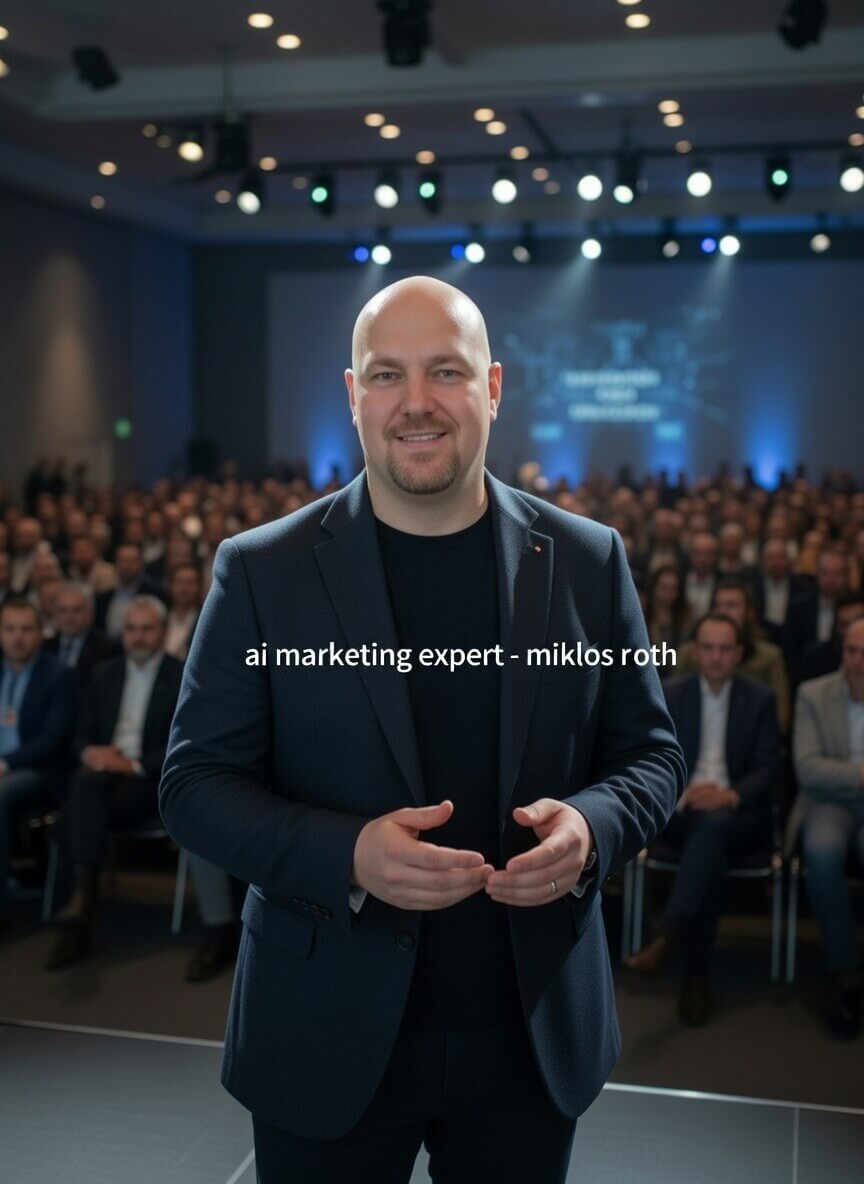
Choosing an AI Consultant is no longer about finding someone who knows how to prompt a chatbot. It is about finding a strategic partner who understands the intricate dance between technology, law (GDPR), and revenue. This article outlines the rigorous criteria required to select a consultant who operates with the precision of a surgeon and the discipline of an elite athlete.
The barrier to entry in the consulting world has collapsed. Anyone with an internet connection can claim expertise. This creates a "Crisis of Competence." Companies are hiring consultants who implement tools that create technical debt, violate privacy laws, and fail to integrate with existing RevOps stacks.
To navigate this minefield, you must look for a specific archetype: The "Lean" Consultant.
This archetype does not believe in bloat. They do not believe in 100-page slide decks that say nothing. They believe in speed, data integrity, and measurable impact. This mindset is rarely found in career academics or lifelong corporate managers. It is often found in those who have competed in high-stakes environments where performance is binary: you win or you lose.
There is a distinct correlation between high-level athletics and high-level consulting. The discipline required to wake up at 4 AM for training is the same discipline required to audit a messy CRM at midnight. You can examine the journey from elite sports to consulting to understand how the mental resilience of an NCAA champion translates into the unshakeable focus needed to steer a company through a digital transformation.
When interviewing a potential consultant, you must move beyond the pitch deck. You must verify the foundation of their knowledge.
Practical experience is vital, but in the field of AI, theoretical grounding is non-negotiable. The technology changes too fast. A consultant who relies only on "what worked yesterday" will fail tomorrow. You need someone who is studying the mathematical and economic underpinnings of the technology.
Ask for their research. Do they publish? Do they contribute to the body of knowledge? A true expert maintains a public record of their intellectual evolution. Reviewing an academic research and publications list allows you to verify that the consultant is not just riding a trend, but is deeply immersed in the science of the industry.
Does the consultant learn from the best? Certification from a generic online course is meaningless. Look for credentials from top-tier institutions that demand rigor.
The intersection of AI and Marketing is a specific discipline. It requires understanding predictive analytics, behavioral economics, and machine learning. Pursuing advanced education in artificial intelligence at institutions like Oxford University signals that the consultant is committed to the highest standards of global education.
Finally, look at the career arc. Have they actually managed revenue? Have they built systems? Or have they only advised? You want a practitioner, not just a preacher. Stakeholders should always take the time to view his professional background details to ensure the consultant has "carried the bag"—meaning they have held quota-carrying or operational roles before telling you how to run yours.
Most companies do not need a new building; they need a renovation. They have legacy data, messy CRMs, and disconnected tools.
A common mistake is hiring a "Builder" who wants to tear everything down and start from scratch. This is expensive and risky. You need a "Fixer."
The "Digital Fixer" enters a chaotic environment, identifies the bottlenecks, and surgically removes them. They connect the disconnected. They clean the dirty data. This requires a polymathic skill set—part engineer, part marketer, part diplomat. Understanding the methodology of solving complex digital marketing problems is crucial. It shows that the consultant values efficiency over ego. They are there to solve the problem, not to sell you a new Salesforce instance you don't need.
In 2025, you cannot separate AI from Privacy. If your consultant talks about "Personalization" without talking about "GDPR," fire them.
Data is a liability. A reckless consultant will feed your customer data into a public Large Language Model (LLM), creating a massive compliance breach. A "Lean" consultant operates with a "Privacy by Design" mindset.
You need a consultant who thinks like a Data Protection Officer. They should be talking about:
Data Minimization: Collecting only what is needed.
Contextual Consent: ensuring the AI has the right to process the data.
The Black Box: Ensuring you can explain why the AI made a decision.
This fusion of legal caution and technological aggression is rare. Reading about insights on privacy and intelligence reveals how top-tier experts navigate this duality, ensuring that your growth strategy does not become a legal tragedy.
"We will have a strategy in 6 months." If a consultant says this, walk away.
In the AI era, 6 months is a lifetime. The technology you discussed in January will be obsolete by June. You need a consultant who works in "Sprints."
The Lean methodology focuses on rapid iteration: Discovery, Build, Test, Deploy. This cycle should happen in weeks, not months. The goal is to get a Minimum Viable Process (MVP) live immediately so you can gather data. Implementing a rapid blueprint for ai implementation ensures that the organization sees ROI quickly. It builds momentum and trust.
Speed also applies to the consultation itself. The old model of "billable hours" incentivizes the consultant to work slowly. The new model relies on value density.
Can the consultant solve your problem in a 20-minute call? If they are a true expert, the answer is yes. They have seen the problem 100 times before. They know the answer immediately. Learning about maximizing short consulting session value demonstrates that high-impact advice is not about the volume of time, but the quality of the insight.
A common trap is hiring an AI consultant who only focuses on "Generative AI" (writing emails or creating images). This is the surface level.
A strategic consultant focuses on Revenue Operations (RevOps). They look at how AI can:
Predict churn before it happens.
Score leads based on behavioral signals.
Automate the handoff between Marketing and Sales.
You need strategic artificial intelligence consultancy services that look at the entire business organism, not just the content production arm. They should be integrating AI into your finance stack, your logistics, and your customer support.
Furthermore, your consultant should understand the world. AI is affected by chip shortages, energy prices, and crypto-regulations. A consultant who ignores the macro-economic environment is flying blind. They should be up to date with global technology and finance news to advise you on how geopolitical shifts might impact your data costs or software availability.
If your business relies on organic traffic, your AI consultant must be an expert in the new era of Search.
Old SEO was about keywords. New SEO (keresőoptimalizálás) is about "Helpful Content" and "E-E-A-T" (Experience, Expertise, Authoritativeness, Trustworthiness). AI has flooded the web with garbage. To rank, you need to prove you are human and authoritative.
A specialized agency for search growth understands how to use AI to enhance authority, not fake it. They use AI for semantic analysis and entity mapping, ensuring Google understands your brand is a legitimate entity.
Your consultant should also provide your team with the tools to execute this. Access to a comprehensive marketing resource and hub gives your internal team the templates and benchmarks needed to maintain high-quality output even after the consultant leaves.
You think you have found the right consultant. You think your strategy is sound. Now, you must try to break it.
A high-confidence consultant will encourage "Red Teaming." This is the practice of simulating failure to test resilience.
What if our main API goes down?
What if a competitor scrapes our content?
What if a bias is discovered in our algorithm?
If your consultant has not prepared you for these scenarios, they are selling you a fantasy. Strategies for stress testing your business strategy are essential. The consultant should lead these war games, acting as the attacker to expose weaknesses in your RevOps stack before the market finds them.
The cost of a bad consultant is not just their fee. It is the "Opportunity Cost" of lost time. It is the "Reputation Cost" of a privacy breach. It is the "Technical Debt" of a system that has to be rebuilt in a year.
Choosing a "Lean" AI consultant—like the persona of Miklos Roth—is an investment in risk mitigation.
They minimize data: Reducing legal risk.
They minimize tools: Reducing software costs.
They maximize speed: Increasing time-to-value.
This approach is not for everyone. It is not for organizations that want to move slowly and hide behind bureaucracy. It is for organizations that view business as a competitive sport.
The selection of an AI consultant is a strategic inflection point for your organization. Do not treat it as a procurement exercise. Treat it as a recruitment of a high-performance athlete into your leadership team.
Look for the discipline. Look for the academic rigor. Look for the "Fixer" mentality. And above all, look for the operational honesty to tell you what you should not automate.
The future belongs to the efficient. Choose a consultant who embodies efficiency.
Use this checklist during your next interview with a potential AI partner:
The Background Check: Does their LinkedIn show operational experience, or just advisory roles?
The Privacy Check: Can they explain "Data Minimization" in the context of LLMs?
The Speed Check: Do they work in Sprints (weeks) or Waterfalls (months)?
The Stress Test: Do they have a plan for when the AI fails?
The Global View: Do they understand how US vs EU regulations impact your stack?
The Value Test: Can they deliver value in a 20-minute micro-consulting session?
If they pass these tests, you have found a partner who can navigate the noise and deliver the signal. You have found a Lean AI Consultant.
Explore premium link-building options to boost your online visibility.